
This is a very quick introduction to Telugu verbs – designed to help you get speaking right away. To keep it simple, I’ve decided not to include some more advanced stuff like spelling changes or irregular verbs – I’ll cover them in a future post.
Things that interest me
This is a very quick introduction to Telugu verbs – designed to help you get speaking right away. To keep it simple, I’ve decided not to include some more advanced stuff like spelling changes or irregular verbs – I’ll cover them in a future post.
I’m writing this article to provide an update to this post. Since writing, it here’s what I’ve gotten done:
I wanted to get more done by this point, and in the spirit of working on the process, here are some things that I think I need to do to be more successful in this endeavor.
Let’s say you live in the New York Metropolitan region, the area defined by New York City and its surrounding suburbs. You want to learn a language, but you don’t want to learn one to travel somewhere. Instead, you want to learn a language to communicate with people in your region who speak that language. What language should you learn?
I argue that your best bet is Spanish, Chinese (Mandarin/Cantonese), Russian, Korean or Bengali. I argue this based on a combination of three metrics. The first is total number of speakers of each language, the second is total number of speakers of each language who also don’t speak English well, and third is the percentage of each linguistic community who do not speak English well.


I’m in the middle of reading The Autobiography of Malcolm X, and I’m at the chapter where he moves to Detroit after converting to the Nation of Islam.
Malcolm mentions the NOI’s Temple No #1, citing an address on Frederick St. That wasn’t the Temple’s first address, nor was it the final one. Temple Number 1 now stands at 11529 Linwood Street, in Detroit’s Dexter Linwood neighborhood. Although it’s formally known as Temple Number 1, it is also referred to as Masjid Wali Muhammad [1].
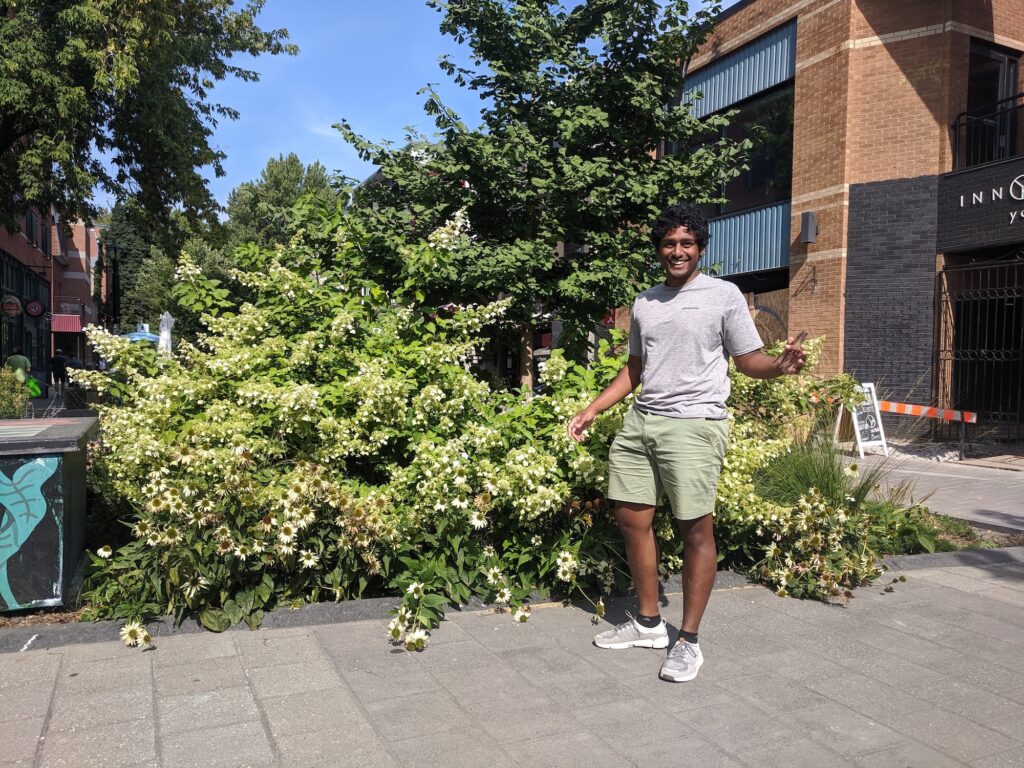
I just finished an 8 day trip to Montréal (with 2 days on either end in Toronto). I had some expectations about this trip that I don’t think were met, but still learned many lessons from it that I’ll share today.
My expecations about this trip
This is my second long solo trip. The first one was when I went to Mexico City in February 2020 for 10 days. I went to explore the city, get out of the cold Michigan winter, and see the Monarch Butterfly Preserve. I also wanted to immerse myself in a Spanish speaking environment, and use Spanish. I ended up speaking a decent amount of Spanish to get around, but ended up speaking mostly English with the other people at the hostel.
Since I’ve been writing about languages for a while, I thought it was time I outline my language learning method, and some reasons why I think this has been successful for me.
For background, I am fluent in Spanish (with a B2 certification from the Instituto Cervantes, and I’ve used it to tutor monolingual Spanish students in a local high school) and am conversational in French (see this post). I previously learned tourist Hebrew when I lived in Israel for the summer. Because of my family, I can also understand and speak some Telugu, though my comprehension decreases the more someone speaks “pure”, rather than English influenced Telugu.
Jan 2023: See an update to these goals
I find that having a plan, even if I don’t follow it to a T, helps me feel like I’m moving towards a goal. I also find that publishing a plan makes it feel more concrete. Hence, I’m posting my three year plan. This plan should guide me from now until the end of the 2024 Olympics in Paris (I started thinking about long term planning when I was watching this year’s Olympics).
My plan is divided into two categories – languages, and writing.
I speak Spanish fluently, and even took a language exam to prove my proficiency. I find languages to be a pretty high reward activity, but one that requires significant delayed gratification. For many years I never thought I would be able to communicate in Spanish fluently, but now I can almost think in Spanish. My Spanish is not perfect, but there’s not a ton of incentive to get to C1 or C2 level unless I started working in Spanish. I can carry out most interactions with Spanish speakers that I encounter in the United States.
July 2022 Update: For a number of reasons, I didn’t end up following through with this plan. I’m starting this challenge again, see this post for more information.
Telugu is one of the languages I have wanted to improve for a while. I now have more time (and better time management skills). This post will outline my current level of Telugu, what I want to learn, and how I plan on learning it.
I’m posting this online to hold myself accountable and to help others understand how I go about learning languages. Hopefully this can help guide your own language learning journey.
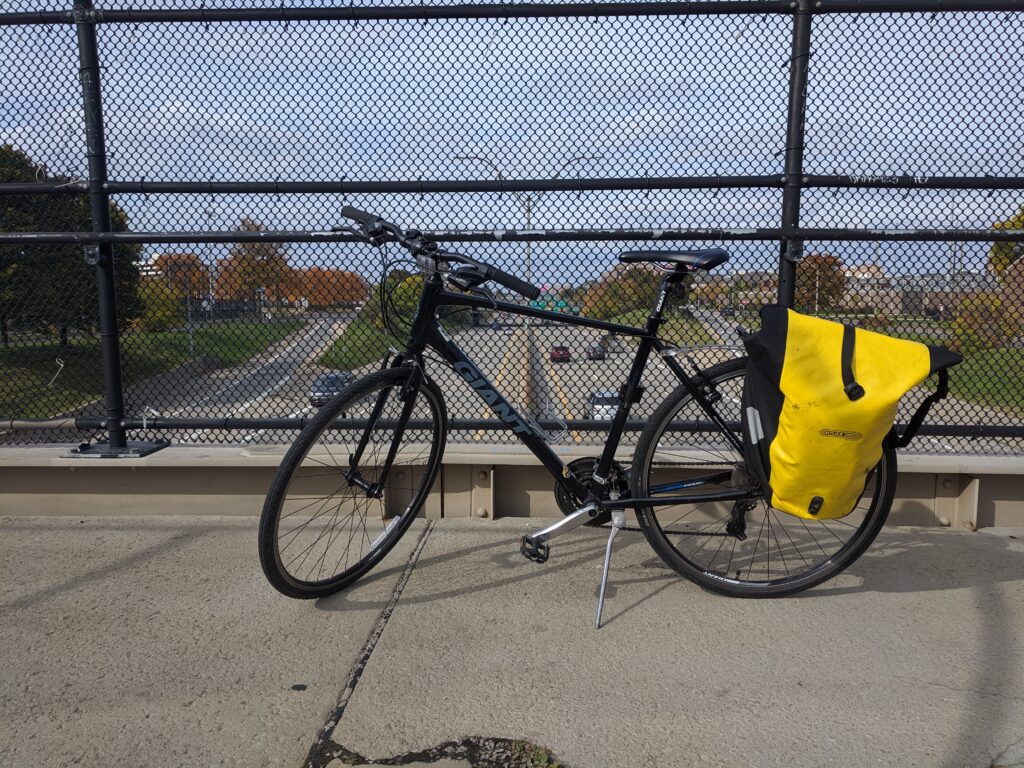
Contrary to popular perception, Detroit is great place to bike. The city’s roadways are engineered for traffic three times larger than the current population, so there are plenty of wide roadways with few cars. Because Detroit follows a grid, there are also plenty of parallel neighborhood streets that can be used to avoid busy roads. On top of that, the city has been investing in protected bike infrastructure, and is beginning construction on the Joe Louis Greenway, a 27.5 mile biking and walking trail.
You can combine roads with protected bike infrastructure and roads that are naturally ideal for cycling (wide road with little traffic) to produce long routes that are low stress. These routes aren’t often marked on maps, and are usually learned through experience. To make it easier for new cyclists, I’m going to outline one of those routes, which connects downtown Detroit to Ferndale. I call it the Cass / Hamilton / Livernois bike corridor, or the Hamilton Bikeway for short.

I have long been fascinated with Canada. I grew up less than two hours from the border in western NY, and we used to go to Niagara Falls (the Canadian side) every time family visited us when I was little. The thing that always interests me is that (English speaking) Canadians are very similar to Americans both linguistically and culturally (well, maybe except for hockey) yet it’s a completely separate country with their own cultural variations.
